


Science and Technology Secretariat–OP Applauds Busitema University’s Innovation Progress During Monitoring Exercise
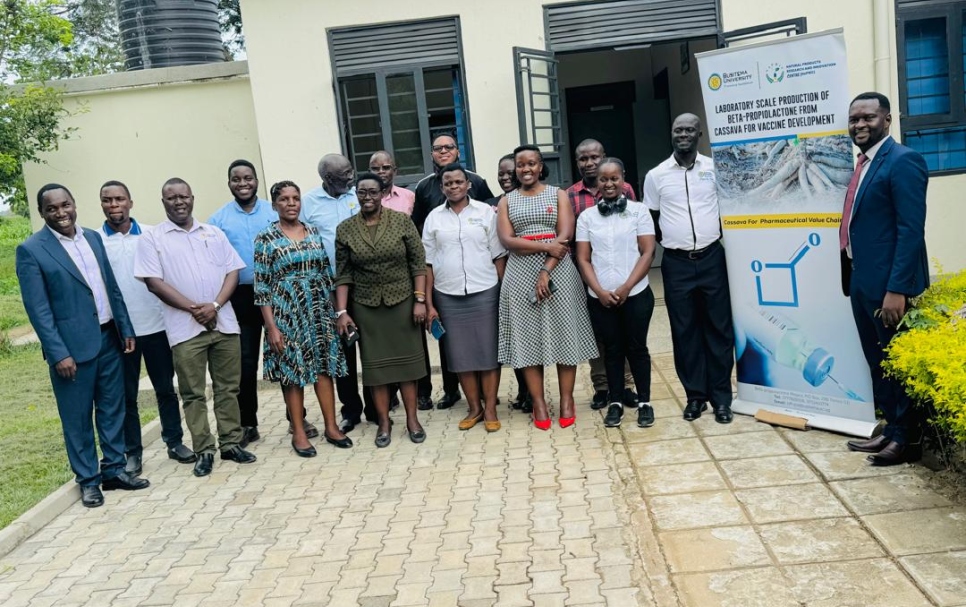
Busitema University recently hosted a monitoring and evaluation exercise conducted by the Pathogen Economy Bureau under the Secretariat of Science, Technology and Innovation (STI), Office of the President. The visit highlighted steady progress in research-driven innovation despite ongoing challenges.
The two-day exercise, held from 15th to 16th April 2026, brought a delegation led by Ms. Brendah Nakazibwe, accompanied by Mr. Patrick Albert Ipola, Ms. Leah Nabirye, and Mr. Davies Twine. The team engaged with several university-based ventures focused on transforming locally developed scientific ideas into commercially viable products.
Among the projects assessed was the OVTAC venture, which is optimizing and adding value to Tazcov and Glucotak herbal remedies in preparation for commercialization. The Provirid venture is developing and standardizing a herbal formulation for the management of HIV/AIDS, while the Carienil team is advancing a herbal toothpaste designed to manage dental caries. Another notable initiative, the Betapropiolactone (BPL) venture, is exploring the synthesis of BPL from cassava for industrial applications.
The visiting team commended the progress made across all ventures, noting that researchers have continued to advance their work despite procurement delays, limited funding, and infrastructure constraints.
Speaking during the visit, Ms. Nakazibwe applauded the university’s leadership for its consistent support for innovation and praised the research teams for their commitment. She emphasized that the Government of Uganda remains deliberate and committed to investing in science, technology, and innovation. However, she underscored the need to demonstrate clear returns on investment in the medium and long term, urging scientists to develop strong, evidence-based business cases to support commercialization and build stakeholder confidence.
Dr. Samuel Baker Obakiro, the STI Coordinator at Busitema University, called for the expedited development of intellectual property and benefit-sharing frameworks at both national and institutional levels. He noted that such policies are critical for safeguarding innovations and ensuring fair commercialization processes.
The Deputy Vice Chancellor for Academic Affairs and Research, Prof. Saphina Biira, expressed appreciation for the continued support from the Secretariat, noting that initial seed funding has catalyzed the growth of strong research teams aligned with key industrial value chains. Several of these teams have since attained Centre of Excellence status, including the Natural Products Research and Innovation Centre at Mbale Campus, the Space Science Institute and Materials and Energy Centre at Nagongera Campus, and the Agroscience Park at Arapai Campus.
She also highlighted ongoing efforts to strengthen commercialization pathways through the establishment of the Busitema University Fund, which is in the final stages of formalization as a holding company to support innovation uptake. At the same time, the university is reviewing its intellectual property policy to align with emerging national and institutional priorities, with the aim of promoting innovation and facilitating the commercialization of university-generated knowledge.
Concerns about infrastructure were raised by Prof. David Olema, Dean of the Faculty of Science and Education at Nagongera Campus, who appealed for increased investment in facilities. He noted that while the university has highly qualified personnel and modern equipment, limited workspace remains a significant bottleneck.
From the health sciences perspective, Prof. Dan Kibuule welcomed the growing collaboration between academia and the pharmaceutical industry, describing it as a critical step toward enhancing practical training, skills development, and product development. He highlighted several innovations already nearing market readiness, including Tazcov and Glucotak for the management of acute respiratory illnesses and diabetes, respectively. Both products have been notified by the National Drug Authority, with Tazcov having successfully completed Phase II clinical trials at the Makerere Lung Institute.
Other promising innovations in advanced stages include Hericorp herbal soap for the management of skin infections and Trichos technology for preventing aflatoxin contamination during storage.
The monitoring team concluded the visit by offering guidance to the various ventures, recommending targeted, venture-specific engagements to address existing bottlenecks, as well as increased resource mobilization to accelerate progress toward commercialization.
Overall, the exercise reaffirmed Busitema University’s growing role as a hub for applied research and innovation, with tangible contributions to national
- 50 views